
Tag: Masters Cycling
-

The Lactate Clearance Secret
Why Some Cyclists Can Attack Again and Again While Others Explode There are secrets in cycling. No, I’m not talking about doping. Every time someone mentions “secrets” in endurance sports, that’s where people’s minds immediately go. What I’m talking about are the things that the best riders understand, either consciously or unconsciously, that many cyclists…
-

Power Is Not Absolute
Why Watts Scale to the Athlete—and Why Cycling Still Gets It Wrong There’s a persistent myth in cycling that refuses to die: “Bigger riders are faster on the flats because they produce more power.” It sounds like physics. It isn’t. There is no law of physics—none—that says higher absolute watts make you faster without considering…
-

The Long Ride Myth: Cost, Context, and Why Volume Isn’t the Same as Development
For as long as endurance sport has existed, athletes have been told that long rides are the foundation of fitness. Three, four, five hours at a time. Regularly. Religiously. The logic feels intuitive: more time must equal more endurance. But intuition isn’t physiology. And for trained athletes, that belief has quietly outlived its usefulness. The…
-

Beyond the Zone: Why “Perfect” Metrics Can Lead to Fragile Fitness
The Standard Model: Why We Use Zones Most training is built on Output Zones—calculated as a percentage of your FTP or Max Heart Rate (mine is 203 bpm). We use them because they provide a repeatable, objective language for intensity: • Zones 1-2: Aerobic foundation and recovery. • Zone 3: Tempo and steady-state work. •…
-
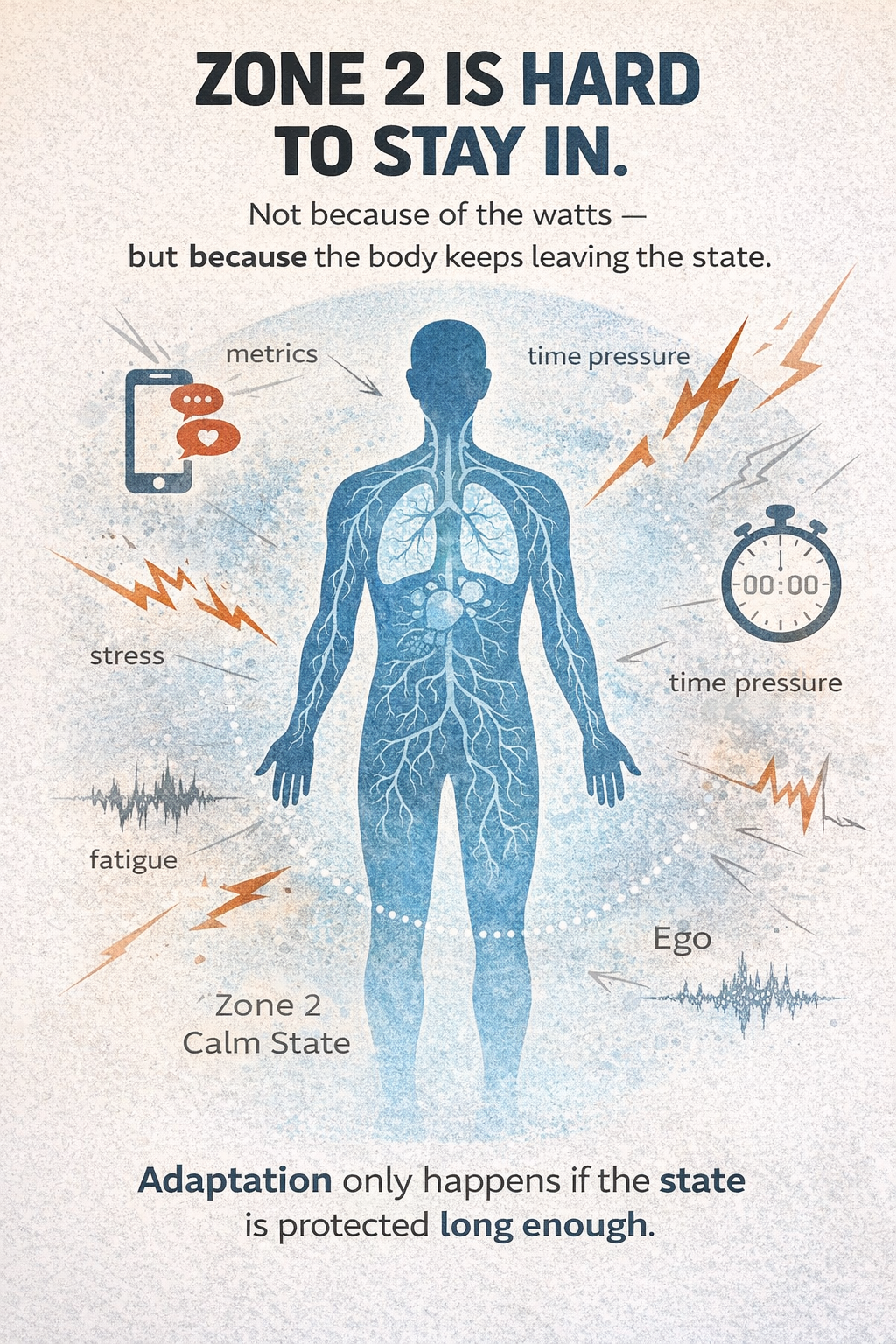
Zone 2 Is a Truce — The Physiology of Letting Adaptation
(Part 2 of “Zone 2 Isn’t a Number — It’s a State”) Fuel your next breakthrough. Don’t miss new insights, workouts, and the launch of SMART Cycling. If Part 1 established that Zone 2 is a metabolic environment governed by the parasympathetic nervous system, then Part 2 must answer the harder question: Why is it so…
-

Breaking the Volume Monster: Why Your Zone 2 Obsession Has Hit a Ceiling
In the world of endurance sports, a seductive myth has taken hold: the belief that endless miles of Zone 2 (Z2) training will indefinitely raise your FTP and VO_2 max. This has birthed a new archetype—the Volume Monster. These are athletes stacking 20 to 30 hours a week, often sacrificing their social lives and family…
-

Experience Doesn’t Mean Your Training Makes Sense
Most training mistakes aren’t made by beginners. They’re made by experienced cyclists doing what feels familiar, disciplined, and responsible. The problem isn’t a lack of knowledge. It’s that experience creates confidence — and confidence creates momentum. And momentum can carry you in the wrong direction for a very long time. Experience teaches you how to…
-

The FTP Mirage: Why the Number You Worship Isn’t What Makes You Fast
Parsing power, physiology, and what actually matters when the race gets hard Most cyclists can name their FTP as casually as their height. It has become the sport’s shorthand identity marker — a metric that promises to define how strong we are, and how fast we should be. It is easy to test, simple to…
-
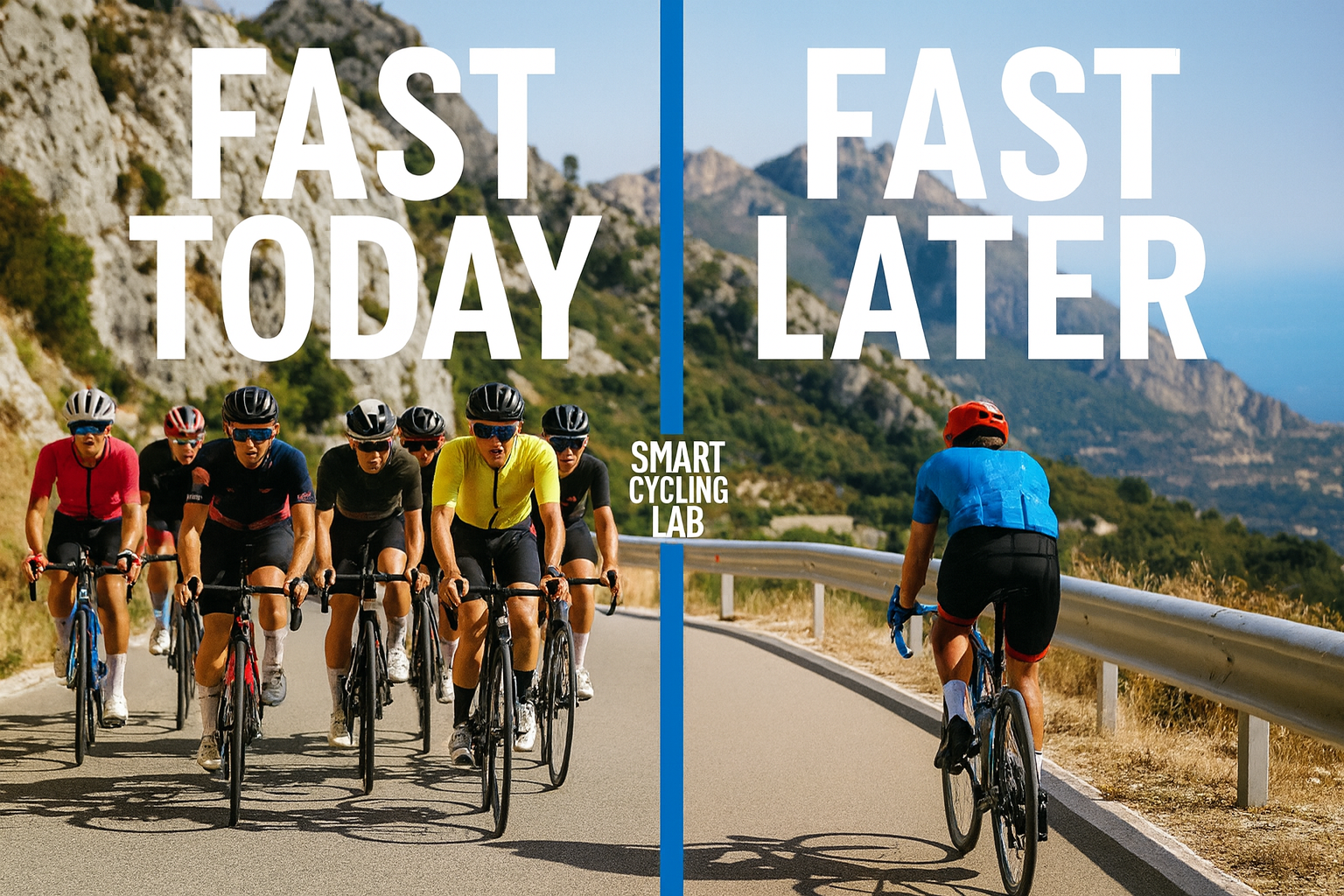
Fast Today vs Fast When It Matters
A Calpe Reality Check for Riders at Every Level If you want to understand how athletes really train, go to Calpe in November. The roads are full of every type of cyclist: It’s a living ecosystem of training philosophies — good, bad, and delusional. And here’s the truth I learned: Most riders swear they’re riding…
-

The Science of Steady
How Real Endurance Is Built — SMART Rider Series, Part 2 Last time, in Base: Where Slow Becomes Fast, we explored why patient base work builds the foundation for every season that follows. Now, in Part 2, we move beyond patience and into precision — the difference between logging hours and creating adaptation. Ride Slow…