
Category: Uncategorized
-

The Lactate Clearance Secret
Why Some Cyclists Can Attack Again and Again While Others Explode There are secrets in cycling. No, I’m not talking about doping. Every time someone mentions “secrets” in endurance sports, that’s where people’s minds immediately go. What I’m talking about are the things that the best riders understand, either consciously or unconsciously, that many cyclists…
-

Beyond the Zone: Why “Perfect” Metrics Can Lead to Fragile Fitness
The Standard Model: Why We Use Zones Most training is built on Output Zones—calculated as a percentage of your FTP or Max Heart Rate (mine is 203 bpm). We use them because they provide a repeatable, objective language for intensity: • Zones 1-2: Aerobic foundation and recovery. • Zone 3: Tempo and steady-state work. •…
-
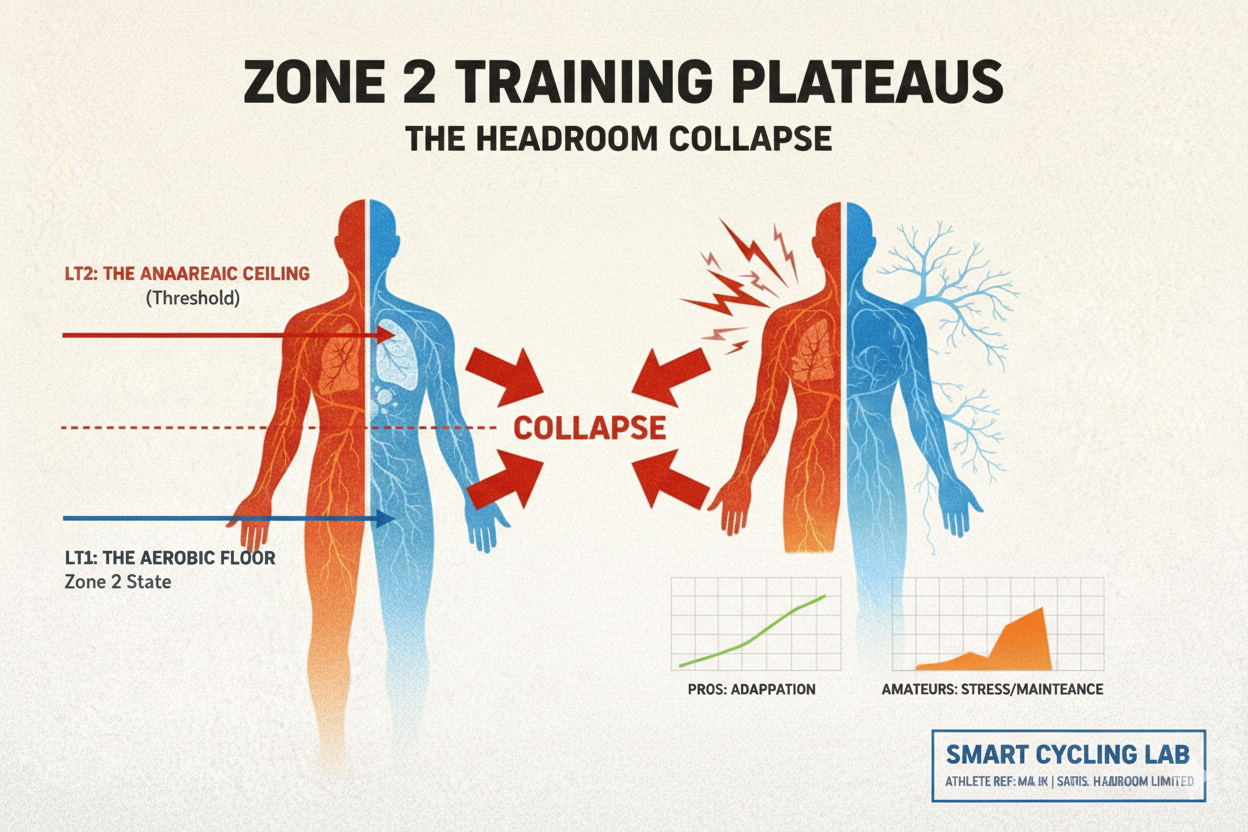
Zone 2 Training Plateaus: Why It Elevates Pros but Traps Amateurs
Zone 2 Needs Space Above It — Why It Elevates Some Pros, Breaks Others, and Traps Amateurs in Maintenance. Zone 2 has become the most discussed training zone in cycling — and also the most misunderstood. What was once a vague concept of “endurance riding” has evolved into something far more precise: a zone defined…
-
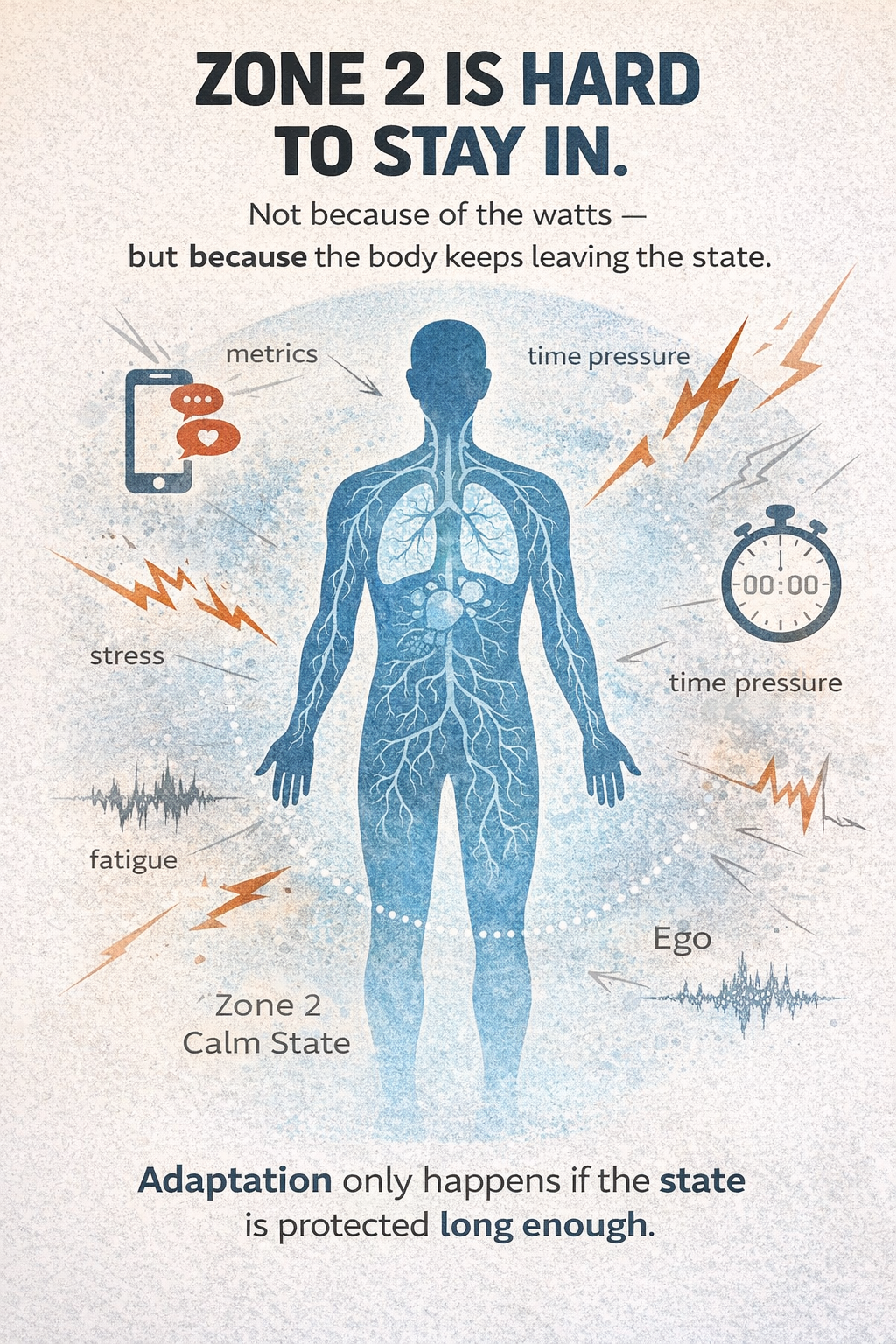
Zone 2 Is a Truce — The Physiology of Letting Adaptation
(Part 2 of “Zone 2 Isn’t a Number — It’s a State”) Fuel your next breakthrough. Don’t miss new insights, workouts, and the launch of SMART Cycling. If Part 1 established that Zone 2 is a metabolic environment governed by the parasympathetic nervous system, then Part 2 must answer the harder question: Why is it so…
-

Breaking the Volume Monster: Why Your Zone 2 Obsession Has Hit a Ceiling
In the world of endurance sports, a seductive myth has taken hold: the belief that endless miles of Zone 2 (Z2) training will indefinitely raise your FTP and VO_2 max. This has birthed a new archetype—the Volume Monster. These are athletes stacking 20 to 30 hours a week, often sacrificing their social lives and family…
-

Experience Doesn’t Mean Your Training Makes Sense
Most training mistakes aren’t made by beginners. They’re made by experienced cyclists doing what feels familiar, disciplined, and responsible. The problem isn’t a lack of knowledge. It’s that experience creates confidence — and confidence creates momentum. And momentum can carry you in the wrong direction for a very long time. Experience teaches you how to…
-

The FTP Mirage: Why the Number You Worship Isn’t What Makes You Fast
Parsing power, physiology, and what actually matters when the race gets hard Most cyclists can name their FTP as casually as their height. It has become the sport’s shorthand identity marker — a metric that promises to define how strong we are, and how fast we should be. It is easy to test, simple to…
-

The Science of Steady
How Real Endurance Is Built — SMART Rider Series, Part 2 Last time, in Base: Where Slow Becomes Fast, we explored why patient base work builds the foundation for every season that follows. Now, in Part 2, we move beyond patience and into precision — the difference between logging hours and creating adaptation. Ride Slow…
-
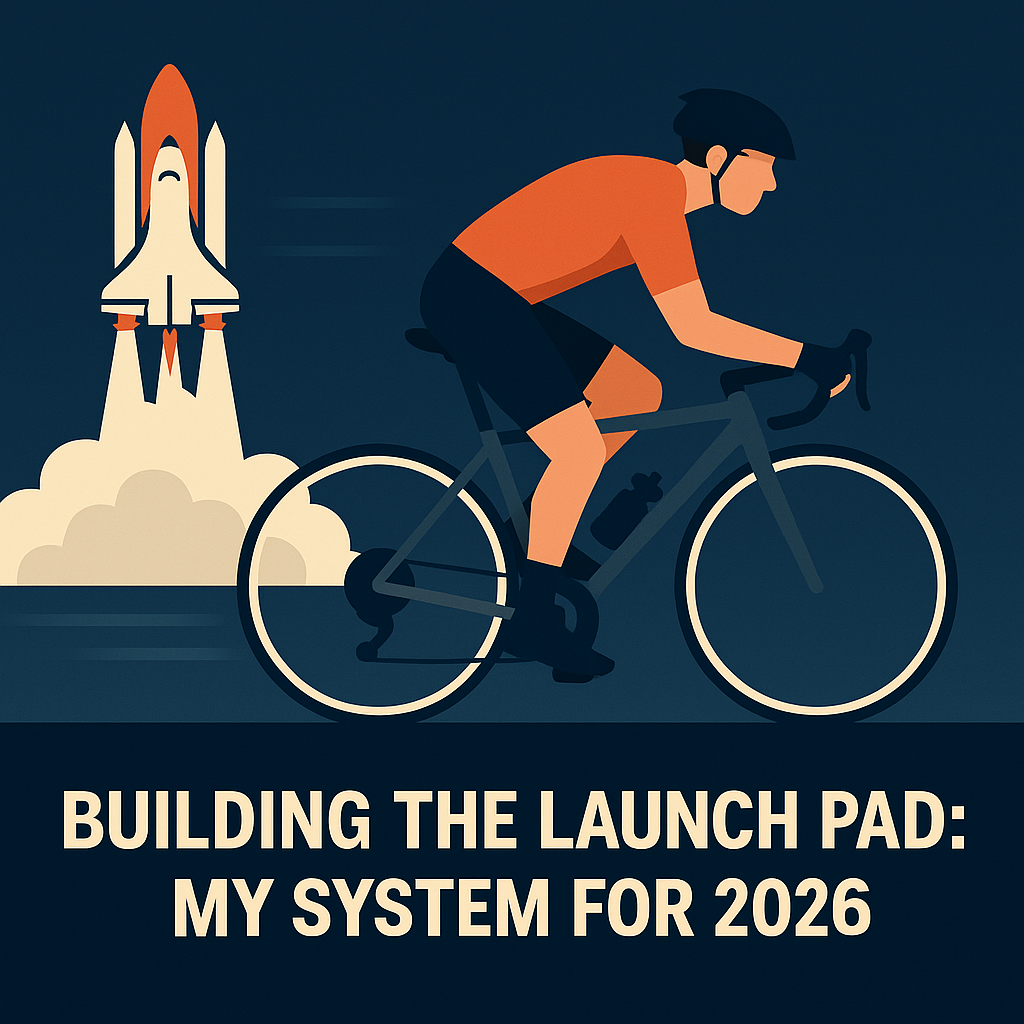
Building the Launch Pad: My System for 2026
From the Lab Series Recap In Part 1 — FTP Isn’t a Ceiling, It’s a Launch Pad, I challenged the idea that FTP is a finish line. It’s not a number to hold — it’s a system to launch from. That post reframed performance as metabolic integration: the ability to surge, clear, and sustain above…
-

How Pogačar Won Worlds: Smart Cycling Lessons from an 8.6 W/kg Breakaway
The Rainbow Repeat Tadej Pogačar didn’t just win the 2025 World Championships — he dominated them. On a course stacked with over 5,000 meters of climbing at 1,400–1,800 meters elevation, he attacked on the final climb of Mont Kigali, producing an estimated 8.6 W/kg (≈ 554 W) for three minutes, then held near-threshold power for…